1. Why is vascular clinic signage particularly important?
Unlike the entertainment or food and beverage industries, which favor bold and unconventional designs, healthcare signage carries its own distinct characteristics:
- Building absolute trust: Vascular conditions (cardiovascular disease, peripheral vascular disease, musculoskeletal-vascular disorders, etc.) are serious and dangerous. A neat, clear sign helps patients feel reassured from the very first glance.
- Ensuring legal compliance: Clinics are a regulated type of business. Signage must strictly adhere to Ministry of Health regulations to avoid administrative penalties.
- Increasing brand recognition: Among hundreds of clinics in major cities, signage with a distinctive identity helps patients easily remember the facility and return when they need care.
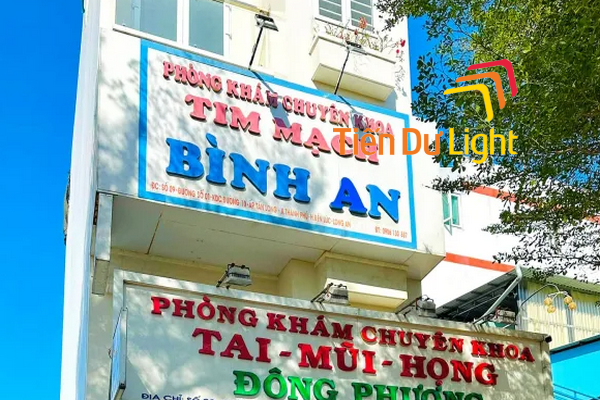
Tầm quan trọng của bảng hiệu phòng khám mạch
2. Mandatory regulations for clinic signage under the Ministry of Health
Under Government Decrees and Ministry of Health Circulars, signage for specialty clinics (including vascular clinics) must display the following mandatory information:
Required administrative information:
- Name of the direct supervising authority (Provincial/City Department of Health or the Ministry of Health).
- Full name of the facility: Must match exactly the name on the Operating License (e.g., Duc Tam Cardiovascular Specialty Clinic).
- Operating License number issued by the competent authority.
- Full name of the Person Responsible for Professional and Technical Affairs (the clinic's lead physician).
- Daily working hours of the clinic.
- Full address and contact phone number.
Format and language requirements:
- Language: Must be written in Vietnamese. If foreign language text is included, it must appear below the Vietnamese text and in a smaller font size.
- Logo/Symbol: The Red Cross symbol may not be used without permission from the Vietnam Red Cross Society. Clients may substitute stylized symbols such as a heart, heartbeat line, or stethoscope.
3. Essential types of signage for a professional vascular clinic
A consistent and clear signage system supports more efficient operations while enhancing the patient experience from the very first visit.
3.1. Façade signage
The most important component, allowing patients to identify the clinic from a distance. Façade signage is typically designed in a modern, minimalist style that still clearly conveys medical expertise.
Required information includes:
- Clinic name
- Brand logo
- Cardiovascular specialty designation
- Contact hotline
- Address
- Operating hours
Common materials:
- Aluminum composite panel with raised acrylic lettering
- Raised stainless steel lettering
- LED light box
- Hiflex banner signs
- LED module illuminated signs
3.2. Reception desk signage
The reception area is the first point of contact for patients, so signage here helps create a professional impression and reinforces brand recognition.
Commonly used styles:
- Wall-mounted raised acrylic logo
- Backlit stainless steel lettering
- LED backdrop
- Logo partition with halo lighting
Reception signage should be designed to feel light, clean, and appropriate for a medical environment.
3.3. Interior directional signage
A vascular clinic typically has multiple functional areas, such as:
- Examination rooms
- Echocardiography (cardiac ultrasound) room
- Electrocardiogram (ECG) room
- Pharmacy counter
- Patient waiting area
As a result, a wayfinding signage system plays a critical role in guiding movement and reducing confusion.
Common types of directional signage:
- Ceiling-hung signs
- Wall-mounted signs
- Freestanding directional standees
- Room number signs
- Patient flow/queue management signs
Content should be concise, easy to read, and use clear, distinct colors.
3.4. Electronic LED signage
Many clinics today use LED display boards to show:
- Patient queue numbers
- Work schedule announcements
- Health advisory content
- Operating hours
- Medical examination promotions
Advantages of LED signage:
- Highly visible both day and night
- Content is easy to update
- Attracts attention effectively
- Adds a modern feel to the clinic
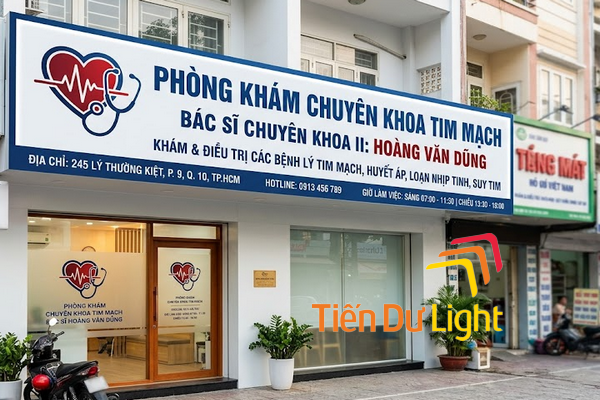
Check out these examples of beautiful and unique clinic signage
3.5. Doctor name boards and functional room signs
This type of signage helps patients easily identify the examination location and the attending physician.
Information typically includes:
- Doctor's name
- Professional title and specialty
- Room name
- Room number
Common sign styles:
- UV-printed acrylic
- Etched stainless steel
- Replaceable-content acrylic signs
- Premium acrylic panels
3.6. Regulations and medical guidance boards
A professional clinic cannot do without regulation and guidance boards to maintain order and support patients throughout the consultation process.
Common content includes:
- Medical examination procedure
- Clinic regulations
- Payment instructions
- Hygiene requirements
- Cardiovascular health advisories
These boards should be placed in waiting areas or main corridors where patients can easily read them.
3.7. Outdoor signage and blade signs
For clinics located in residential areas or high-traffic locations, blade signs and outdoor boards significantly improve visibility.
Common types:
- Double-sided light box signs
- LED blade signs
- Vacuum-formed acrylic signs
- Aluminum panels with integrated lighting
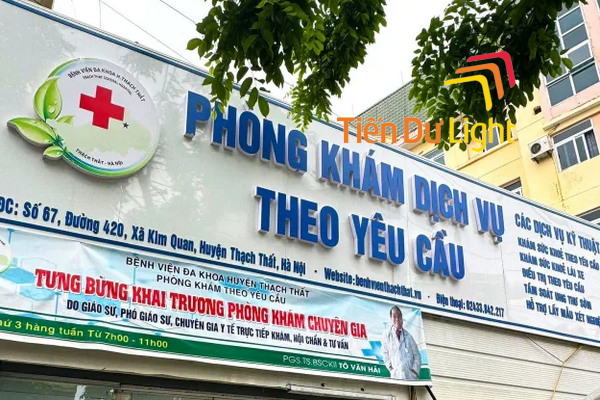
A beautiful and impressive sign for a medical clinic
4. Suitable colors and materials for vascular clinic signage
Soft color palettes such as blue, white, or green are generally preferred, as they convey a sense of cleanliness, reliability, and reassurance for patients.
4.1. Primary color palette
For a vascular clinic, colors should evoke vitality, smooth flow, and professionalism:
- White: A symbol of purity and cleanliness, meeting medical standards. Typically chosen as the background color.
- Blue: Evokes a sense of calm and trust, helping to ease patient anxiety.
- Red / Lotus pink (used as a gentle accent): Symbolizes the circulatory system, blood flow, and life. However, it should be used only as an accent element (such as a heartbeat logo) rather than the primary background color, to avoid visual overstimulation.
4.2. Popular and durable materials
- Aluminum composite panel with raised acrylic lettering: The go-to "universal" choice. The aluminum (Alu) substrate withstands weather well, while the raised acrylic lettering with integrated LED lighting keeps the clinic visible and prominent day and night.
- Raised stainless steel lettering with acrylic face: Delivers an elegant, premium appearance - ideal for large-scale vascular clinics or internationally standardized practices.
- LED signs / Ultra-slim light boxes: Placed at the reception area or hung at the frontage to clearly display working hours, making it easy for patients to see at night.
Vascular clinic signage is not merely a façade - it is a passport of trust connecting doctors with their patients. Investing in well-crafted, legally compliant, and thoughtfully designed signage is a strategic step that helps your clinic assert its position and achieve sustainable growth.
Tags: