Loading...

A great-looking sign is not just the result of good design - it depends largely on the quality of the actual on-site installation work. Many businesses invest in thorough design only to receive a finished product with mismatched colors, peeling surfaces within a few months, or an appearance that falls short of the original drawings - simply because they chose the wrong contractor.
Advertising signage installation is the complete technical process - from site survey and in-house fabrication through transportation to full on-site installation - carried out at the client's actual business location, ensuring the finished sign matches the approved design, is structurally sound, and meets lighting performance standards.
Common Material Categories:
Depending on the industry and budget, businesses can choose from the following signage types:

Tien Du Light - A reputable advertising sign construction company
.png)
A wide variety of advertising signs
A professional contractor follows a closed-loop process to ensure consistent quality from the production facility through to the finished installation:
Step 1 — Site Survey: A technician visits the site to measure the facade, assess the wall structure, confirm installation positions, and evaluate electrical conditions. This is the foundational step - skipping the site survey is the leading cause of sizing errors and installation failures down the line.
Step 2 — Consultation & Technical Drawing: Based on the survey data, the design team produces 2D/3D technical drawings, recommends materials, and verifies colors against the brand's Pantone/CMYK specifications. Drawings are approved by the client before production begins.
Step 3 — In-House Fabrication: All components are produced at the in-house facility: CNC stainless steel cutting, letter forming, LED installation, powder coating, and electrical and brightness testing. Quality control at this stage catches defects early, before anything leaves for the site.
Step 4 — Transportation & Pre-Installation Preparation: Finished components are protectively packaged and transported to the installation site. The technical crew prepares scaffolding, elevated work platforms, and specialized tools in accordance with occupational safety procedures.
Step 5 — On-Site Installation: Installation follows the approved technical drawings: drilling and anchoring, frame welding, attaching letters or lightboxes, and connecting the electrical and LED systems. The crew checks alignment, levelness, and the structural integrity of every element.
Step 6 — Inspection, Handover & Warranty: The entire lighting system, mechanical structure, and surface finish are inspected. Once the client signs off on the inspection, warranty documentation is handed over along with operating and maintenance guidance.
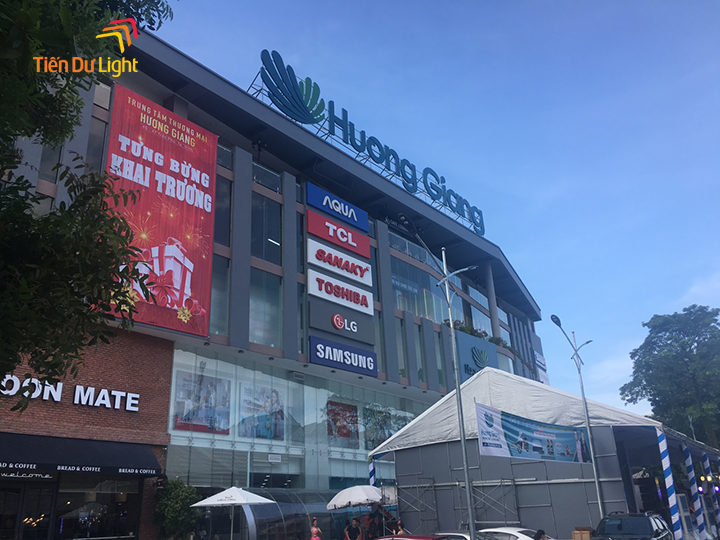
Not every contractor delivers consistent quality. Before signing a contract, verify the following five criteria carefully:
- Does the contractor have its own production facility? A company with an in-house facility controls its own timeline, material quality, and pricing - without depending on external subcontractors. When problems arise, they can resolve them directly rather than deflecting responsibility.
- A real-world portfolio relevant to your industry: Ask to see photographs or site addresses of completed projects, particularly within your sector. Signage for a bank requires entirely different technical standards from signage for a café or a fashion chain.
- Capacity for multi-location installation: If you operate a chain with multiple branches, choose a contractor whose technical teams can deploy across many provinces - ensuring consistent quality and color uniformity across the entire system.
- Transparent contracts and warranty terms: The contract must clearly specify: materials and specifications, installation timeline, and warranty terms for each component category (structure, electrical, surface). Avoid any contractor that makes verbal commitments without written documentation.
- Specialized technical equipment: CNC cutting machines, large-format UV printers, and automated letter-forming equipment directly determine the precision and finish quality of the final product. A contractor relying entirely on manual fabrication will struggle to maintain consistent quality on large-scale orders.


When having advertising signs constructed, it's essential to choose a reputable and professional company
Choosing the right installation contractor is critical to the quality and long-term performance of your signage. Tien Du Light is a contractor that many clients have come to trust, thanks to real-world experience, a professional process, and clear commitments on every project.
Why choose Tien Du Light for advertising signage installation?
An impressive sign is the key to capturing customer attention from the very first glance. With a commitment to internationally benchmarked quality and competitive pricing, Tien Du Light is the optimal choice for businesses of every kind. Contact us today for a consultation and a professional advertising signage solution tailored to your project.
Receive the latest information about our products, promotions, and news.
Head Office: Số 58 đường Thanh Quả, thôn Sinh Quả, xã Bình Minh, TP. Hà Nội
Phone Number: 0961.514.739 - 0904.692.277
Southern Branch: 106 Đông Minh, Phường Đông Hòa, Thành Phố Hồ Chí Minh
Phone Number: 0345.439.055
Email: Contact@tiendulight.com
Hotline: 0961.514.739 (Miền Bắc ) - 0345.439.055 (Miền Nam) - 0904.692.277